How Much Does Eavestrough Installation Cost in Ontario in 2026?
The eavestrough installation cost in Ontario depends on the length of the roofline, gutter material, number of downspouts, home height and installation requirements. Whether you are replacing old gutters or installing a completely new drainage system, understanding the costs can help you plan your home improvement budget.
Eavestroughs, also called gutters, collect rainwater from your roof and direct it through downspouts. A properly installed system helps protect your home’s foundation, exterior walls, landscaping and basement from water damage.
In this guide, we explain approximate 2026 eavestrough prices, compare materials, discuss installation costs and share practical tips for Ontario homeowners.
All prices are approximate planning estimates in Canadian dollars, not guaranteed quotes. Actual costs depend on measurements, materials, labour, access, roof design and the condition of existing fascia boards. Confirm whether removal, disposal and HST are included.
1. Average Eavestrough Installation Cost in Ontario in 2026
For many residential homes, seamless aluminum eavestrough installation costs approximately $8–$18 per linear foot installed, depending on gutter size, material, home height and project complexity.
Here are general price ranges:
| Eavestrough type | Approximate installed cost per linear foot |
|---|---|
| Sectional vinyl | $5–$9 |
| 5-inch seamless aluminum | $8–$14 |
| 6-inch seamless aluminum | $12–$18 |
| Steel | $15–$25+ |
| Copper | $25–$45+ |
These are general budgeting ranges. Premium products, difficult access and complicated rooflines can increase the price.
HomeStars – Gutter and Eavestrough Services in Mississauga
When calculating the eavestrough installation cost in Ontario, remember that contractors usually charge according to the linear footage of the gutter system, rather than the square footage of your house.
2. How Much Does It Cost to Replace Eavestroughs on a House?
The total price depends on how much guttering your home needs and whether downspouts and accessories are included.
Here are approximate project budgets for residential seamless aluminum systems:
| Home or project size | Estimated installation cost |
|---|---|
| Small bungalow | $1,200–$2,000 |
| Average bungalow | $1,500–$2,800 |
| Standard two-storey home | $2,000–$3,800 |
| Large detached home | $3,000–$5,000+ |
| Large or complex roofline | $4,000–$7,000+ |
For example, a house requiring approximately 160 linear feet of 5-inch seamless aluminum eavestroughs might have a planning budget of $1,500–$2,500, depending on the scope of work.
These estimates are not fixed prices. The number of downspouts, corners, roof levels, removal requirements and fascia condition can change the final quote.
3. Different Types of Eavestrough Materials
Choosing the right material is important because Ontario homes experience heavy rain, snow, freezing temperatures and seasonal temperature changes.
Aluminum Eavestroughs
Aluminum is a popular choice for residential properties.
Advantages:
- Available in different colours
- Does not rust like ordinary steel
- Relatively lightweight
- Available in seamless designs
- Generally offers good value for homeowners
Seamless aluminum systems are formed to the required length on-site, reducing the number of joints along straight gutter runs.
Vinyl Eavestroughs
Vinyl eavestroughs are generally a lower-cost option. They are commonly sold in shorter sections that connect together.
Advantages:
- Lower initial material cost
- Lightweight
- Does not rust
- Suitable for some smaller projects
However, sectional joints can become potential leak points. Consider the product’s suitability for local weather conditions before choosing vinyl.
Steel Eavestroughs
Steel systems can provide strength and are available in different finishes.
Advantages:
- Strong construction
- Suitable for certain demanding applications
- Available in different profiles
Protective coatings and regular inspection are important because damaged coatings can allow corrosion.
Copper Eavestroughs
Copper is a premium option often selected for custom homes or traditional architectural designs.
Advantages:
- Distinctive appearance
- Long service life when properly installed
- Develops a natural patina over time
Copper usually costs considerably more than standard aluminum systems.
4. What Is the Difference Between 5-Inch and 6-Inch Eavestroughs?
Most residential homes use 5-inch or 6-inch eavestrough systems.
5-inch eavestroughs
A 5-inch system is a common choice for standard residential roofs. It can be suitable for many bungalows and ordinary two-storey houses.
6-inch eavestroughs
A 6-inch system has a larger capacity and may be useful for:
- Large roof areas
- Steep roof slopes
- Roof valleys that concentrate water
- Areas where heavy runoff is a concern
The correct size depends on the roof area, pitch, rainfall conditions, gutter layout and downspout capacity.
A larger gutter is not automatically necessary for every home. Ask the installer to assess your roof drainage requirements before choosing a size.
5. What Affects Eavestrough Installation Cost?
Several factors can influence the total project price.
Total Linear Footage
The longer the roofline, the more materials and labour are required.
Number of Downspouts
Downspouts carry rainwater from the gutters to the ground or an approved drainage location. Homes with several roof sections may require additional downspouts.
Number of Corners and Roof Sections
Multiple inside and outside corners, roof valleys and unusual layouts can require additional fittings and installation time.
Height of the Home
Two-storey homes may require additional ladders, safety equipment and labour compared with single-storey properties.
Existing Fascia Condition
Eavestroughs are attached to the fascia board along the roof edge. If the fascia is rotten, damaged or uneven, it may need repair or replacement before the new system is installed.
Removal of Old Gutters
Replacing an existing system may involve removing old eavestroughs, brackets and downspouts, followed by disposal.
Ask whether removal and disposal are included in the contractor’s quote.
6. Additional Costs to Consider
The new eavestrough system may require additional work or accessories.
| Additional work | Approximate planning cost |
|---|---|
| Downspout installation | $100–$400+ each |
| Gutter guards | $3–$12 per linear foot |
| Eavestrough cleaning | $150–$400 per home |
| Minor gutter repair | $150–$500+ |
| Fascia board repairs | Depends on damage and length |
| Downspout extensions | Depends on material and length |
These figures are broad estimates. Some contractors include downspouts, hangers and connectors in their full-system price, while others list them separately.
Before comparing quotes, make sure you understand exactly what is included.
7. What Are Gutter Guards and Are They Worth It?
Gutter guards are covers or screens designed to reduce the amount of leaves and debris entering your eavestroughs.
They can be useful for homes surrounded by mature trees.
Common types include:
- Mesh gutter guards
- Perforated aluminum covers
- Screen-style guards
- Foam inserts
- Brush-style inserts
Benefits of gutter guards:
- Reduce the amount of leaves entering gutters
- May reduce cleaning frequency
- Help keep larger debris out of downspouts
- Can improve maintenance convenience
However, gutter guards do not eliminate maintenance. Small debris, roof granules and other material can still accumulate.
Consider the trees around your property and the cost of the guard system before purchasing.
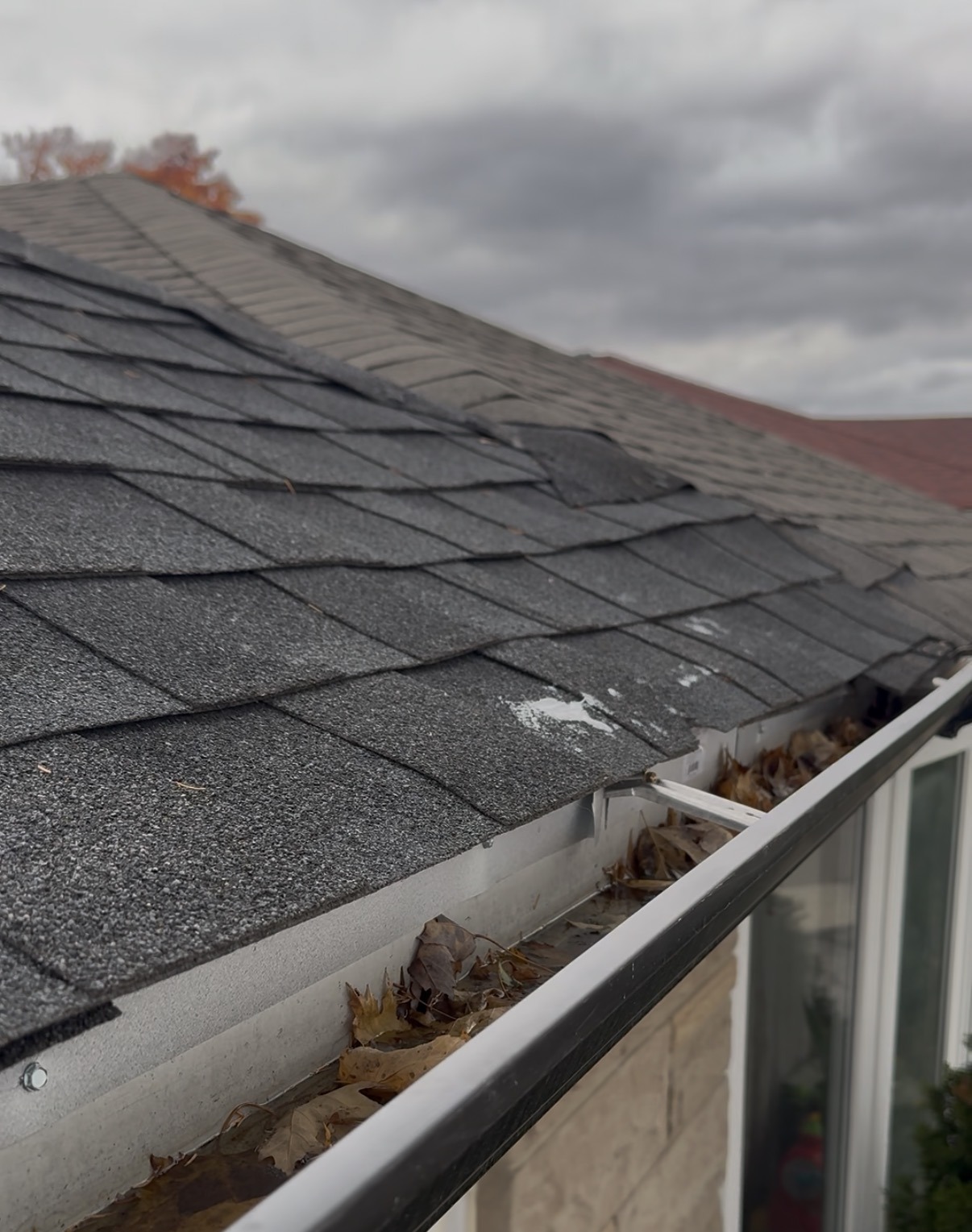
8. Signs Your Eavestroughs Need Repair or Replacement
Damaged gutters may allow rainwater to collect near your foundation or damage exterior surfaces.
Watch for these warning signs:
- Water overflowing: Rainwater spills over the gutter during rainfall.
- Sagging sections: The gutter is pulling away from the fascia.
- Visible leaks: Water escapes from joints, corners or damaged areas.
- Rust or corrosion: Metal sections show deterioration.
- Loose brackets: Hangers or fasteners are no longer holding the gutter securely.
- Pooling water near the foundation: Downspouts may not be directing water away properly.
- Damaged fascia: The board behind the eavestrough shows signs of rot or moisture damage.
Some problems can be fixed with repairs rather than a complete replacement. A professional assessment can help determine the most practical option.
9. Why Proper Downspout Drainage Matters in Mississauga
Eavestroughs are only effective when water is carried safely away from the house.
The City of Mississauga advises homeowners to maintain eavestroughs and downspouts and direct roof water away from foundations and neighbouring properties.
The City’s drainage guidance recommends extending downspouts approximately two metres away from the foundation, where appropriate and safe.
Water should not be directed onto neighbouring properties, public walkways or driveways where it could create flooding or icy conditions.
You can read the City’s official guidance here:
City of Mississauga – Drainage on Your Property
Proper drainage can help reduce water accumulation around your foundation and lower the risk of basement moisture problems.
10. How to Maintain Your Eavestroughs
Regular maintenance helps keep your drainage system working properly.
Clean Gutters Regularly
Remove leaves, twigs and other debris, especially during spring and fall.
Check Downspouts
Make sure downspouts are not blocked and that water flows freely.
Inspect Gutter Connections
Look for leaks around corners, joints and end caps.
Check the Slope
Eavestroughs should be installed with an appropriate slope so water can flow toward the outlets instead of remaining in the gutter.
Inspect After Severe Weather
Strong winds, heavy rain and winter conditions can loosen brackets or damage sections.
Check for Ice and Snow Problems
In winter, blocked or frozen drainage can cause water to back up. Avoid climbing onto an icy roof or attempting dangerous repairs yourself.
11. How to Choose an Eavestrough Contractor in Ontario
Before hiring a contractor, request a written estimate and compare the details.
Ask these questions:
- What material and gutter size will be installed?
- Is the system seamless aluminum or sectional?
- Are downspouts included?
- Does the price include removing old gutters?
- Are hangers, corners and end caps included?
- Will the fascia be inspected?
- What warranty covers the materials and installation?
- Is cleanup and disposal
Check our full Services list:
House Renovation
Kitchen Renovation
Bathroom Renovation
Basement Renovation
Demolition ServicesFraming Services
Electrical Services
Minor HVAC Maintenance Services
Insulation ServicesDrywall Installation & Repair Services
Painting Services
Flooring Services
Tiling Services
General Repairs Services
Carpentry Services
Assembly Services
Pressure Washing ServicesLight Fixture Installation Services
Appliance Installation Services
Babyproofing Services
Deck Repair Services
Hanging Pictures Services
Shelves Installation Services
Door Repair Services
House Decorations Services
Window Covering ServicesCheck out our other Pages:
HOME
ABOUT
BLOG
CONTACT
GET STARTED
PRIVACY POLICY
SERVICES
HANDYMAN SERVICES
RENOVATION SERVICES